Building Meaning and Joy Through Positive Psychology
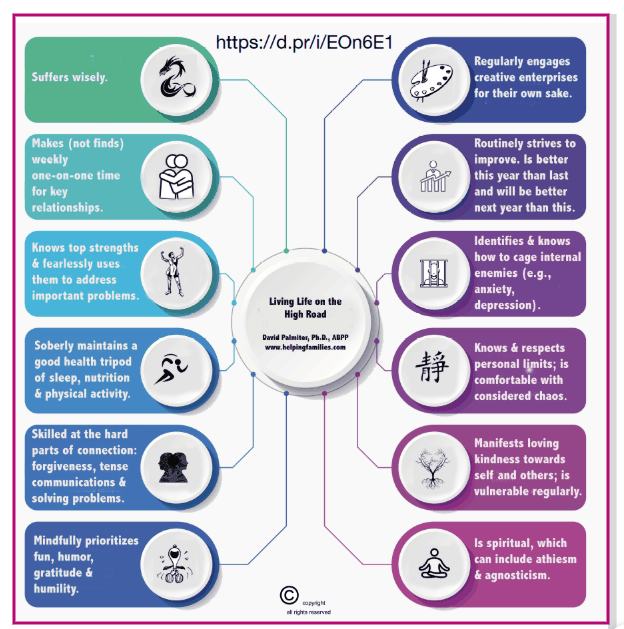
The science of happiness is called Positive Psychology (PP). PP teaches that happiness has a cognitive component–meaning making–and an emotional component–joy. This research also highlights the wisdom expressed in Tolstoy’s famous aphorism: “Happy families are all alike. Every unhappy family is unhappy in its own way.” The number of things that promote enduring happiness is a fairly discrete list, while the number of things that promote misery are countless. How discrete you wonder? We believe there are twelve practices that people living on the high road engage in. Our list is as follows:
How this work is organized depends on the unique concerns of each client. Some want to find a new vocational mission. Others wish to improve their self-esteem. Some wish to stop being so harsh with themselves and others. Others wish to become more aware of what they are grateful for. Some want to allow themselves to be more vulnerable with a life partner. The concerns that bring a client into this discussion can vary widely. We stand ready to teach our clients these methods so they may reach the goals most important to them.

Why Integrate PP into Traditional Therapies?
- Most traditional and science-based therapies are designed to reduce, eliminate or manage suffering. They are relatively silent about how to increase meaning and joy.
- Too often our culture suggests goals that do not promote enduring meaning making and joy (e.g., that the guiding pursuits of money, possessions, power or sexual conquests make people happy). Making such goals the center of one’s life can promote unhappiness.
- Specific, time-efficient practices can be taught to people to promote enduring happiness.
- Living life on the high road includes suffering, adversity and injustice. Leading a life with enduring happiness does not mean that people are free of significant, and sometimes even lasting, pain. It means that they maximize their experiences of meaning making and joy. It also means they reduce or eliminate needless suffering.
- This is complicated work. An expert guide can be very helpful in making life on the high road approachable and practical.
Common Concerns We Address
Anxiety & Stress
Depression & Low Mood
Grief & Loss
Relationship Challenges
Self-Esteem Issues
Life Transitions
Take the First Step Toward Better Mental Health