
Loss changes people. Sometimes it changes them quietly, through an ache that settles into daily life and reshapes how they move through the world. Other times it changes them all at once, through shock, confusion, loneliness, or the painful realization that life will not return to the way it once felt. Whether the loss involves the death of a loved one, the end of an important relationship, a major health change, a traumatic life transition, or another deeply personal rupture, grief can unsettle nearly every part of a person’s life. It can change routines, relationships, identity, hope, and even the way the future is imagined.
In the middle of that kind of pain, the idea of growth can sound almost offensive. Many grieving people do not want to hear that something “good” might come out of what hurts so deeply. That reaction makes sense. Healthy healing after loss is not about pretending pain is a gift, forcing gratitude too soon, or turning grief into a lesson before a person is ready. Real healing is more honest than that. It allows sadness, anger, confusion, fear, and love to all exist together.
Still, over time, some people do discover that loss changes them in ways that are not only painful. They may become more aware of what matters most. They may feel more emotionally honest, more connected to others, more spiritually grounded, or more capable of holding life’s uncertainty with depth and humility. They may not be glad the loss happened, but they may recognize that surviving it changed them in meaningful ways. This is the heart of post-traumatic growth after loss.
Post-traumatic growth does not mean the grief disappears. It does not mean a person “moves on” quickly or leaves the pain behind. It means that over time, amid the sorrow, new strength, insight, meaning, or connection can begin to emerge. That kind of growth is not automatic, and it should never be forced. But it is possible. For individuals and families in Bethesda, Chevy Chase, Rockville and Gaithersburg, MD who are looking for a psychotherapy practice, this can be useful insight. At Helping Families, healing is understood as more than symptom reduction. It is also about helping people make sense of painful experiences, reconnect with themselves and others, and move toward a life that still holds meaning even after profound change.
If you are trying to understand post-traumatic growth after loss, it helps to begin with one clear truth: growth is not the opposite of grief. In many cases, growth happens because a person has been willing to grieve honestly.
When parents begin comparing typical boy behavior vs ADHD, the hardest part is usually not noticing that something feels off. The hardest part is deciding whether the behavior falls within a typical range or whether it is causing enough difficulty to deserve closer attention. Many children are energetic. Many children dislike homework. Many children interrupt, get distracted, or struggle with routines from time to time. ADHD is different because the pattern is usually more persistent, more impairing, and more noticeable across settings like home, school, and social life.
That does not mean every busy or strong-willed boy has ADHD. It does mean parents should look beyond labels like “all boy,” “immature,” or “he will grow out of it” when daily life is becoming harder than it should be. If a child is continuously losing track of instructions, falling apart during transitions, getting into conflict at school, forgetting what he was told moments ago, or needing far more supervision than peers to manage ordinary demands, those signs are worth taking seriously.
This article is designed to help parents, especially those living in Bethesda, Chevy Chase, Gaithersburg and Rockville, MD to think more clearly about boy behavior vs ADHD. The goal is not to encourage overreaction. It is to give families a more practical framework for recognizing when typical developmental behavior may be crossing into something more significant and when it may be time to consider a professional evaluation.
When forgiveness is missing, ordinary hurts are buried alive and can grow into something bigger. Family members start carrying old resentment into new conversations. A small disagreement begins to feel loaded because it is no longer just about the moment at hand. It is about the apology that never came, the harsh words that still sting, the years of feeling unseen, or the pattern that never seemed to change. Tension can then become the background noise of family life.
When forgiveness is present, something different becomes possible. People are still imperfect. They still make mistakes. They still disappoint one another. But the family develops a way to heal after harm. There is more room for repair, more room for empathy, and more room for people to grow without being permanently trapped inside their worst moment. Forgiveness does not erase or justify pain or make relationships healthy. What it does is create a path forward when one family member has hurt another.
For families in Bethesda, Chevy Chase, Rockville and Gaithersburg, MD looking for a psychotherapy practice, this topic matters because many relationship struggles are not only about conflict. They are about what happens after conflict. Does the family know how to repair? Can people talk honestly about hurt without becoming defensive or emotionally frozen? Can the home become a place where healing happens, not just a place where wounds accumulate? At Helping Families, these questions are deeply important because healthy family life depends not only on love, but also on the ability to recover after injury.
This article explores why forgiveness in family life matters so much, what forgiveness really is, what it is not, and how families can begin practicing it in ways that lead to stronger relationships and a healthier emotional home.
That desire is often strongest during transitions. A new year begins. A relationship ends. A child is born. A loss changes perspective. Burnout forces a pause. Anxiety, regret, disappointment, or emotional exhaustion make it harder to ignore the gap between the life a person is living and the life they want to build. In those moments reflection comes to mind that easily stated but more challenging to realize how to become the person you want to be.
It is an important reflection, but it is often addressed too quickly. Many people assume change begins with a burst of motivation, a perfect plan, or a dramatic reinvention. Meaningful personal growth usually begins much more quietly. It begins with honest self-reflection, consistent choices, and the willingness to stop waiting for some future version of life to make change easier. Becoming the person you want to be is usually not about one giant step across the finish line. It is about repeated, intentional decisions that slowly shape your character, relationships, habits, and emotional life over time.
For individuals and families in Bethesda, Chevy Chase, Rockville and Gaithersburg, MD, this topic is very important because modern life makes self-reflection easy to postpone. Work, parenting, relationships, stress, and daily obligations can pull people into survival mode for long stretches of time. It becomes possible to keep functioning while quietly losing touch with meaningful growth. At Helping Families, this kind of process matters because emotional health is not only about reducing distress. It is also about becoming more aligned, more intentional, and more fully yourself in the life you are living.
If you have been asking how to become the person you want to be, the most helpful place to start is not with increasing internal pressure. It is with clarity.
What Post-Traumatic Growth Really Means
When people hear the phrase post-traumatic growth after loss, they sometimes imagine a discrete transformation. They might picture someone who suffers deeply, learns a few lessons, and emerges wiser and stronger in an inspiring and well delineated arc. Real life is rarely that tidy. Growth after trauma or loss is often uneven, quiet, and deeply personal. It may happen alongside ongoing sadness. It may come in brief moments before it becomes something steadier. It may not feel like “growth” at all while it is happening.
At its core, post-traumatic growth refers to positive psychological and emotional change that can develop through the struggle with a painful event. The emphasis matters. It is not the event itself that creates growth. It is the way a person wrestles with what the event has shattered, challenged, or exposed. Loss often disrupts old assumptions about safety, fairness, control, identity, and the future. In time, some people rebuild those assumptions in ways that are more grounded, more intentional, and more deeply felt than before.
That rebuilding can show up in different areas of life. A person may feel more appreciative of ordinary moments. They may notice greater closeness in important relationships. They may become less interested in superficial demands and more committed to what feels meaningful. They may discover strength they did not know they had. They may become more compassionate toward other people’s pain. In some cases, they may find a deeper spiritual or existential clarity. None of this negates grief. It simply means grief is not the only thing shaping the future.
Complicating matters even more, boys are often more likely to show outwardly visible hyperactive or impulsive symptoms, while other children may present in quieter, more inattentive ways. That can make the ADHD conversation feel more urgent in boys who are getting negative attention at school or at home. It can also lead adults to minimize concerns by saying, “He is just being a boy,” when the level of difficulty is actually beyond what is typical for his age and gender.
Parents are also navigating mixed messages. One person says boys are naturally more active. Another says schools expect too much. Another says it is a discipline problem. Another suggests ADHD immediately. Such shoot-from-the-lip oversimplifications can make it harder to trust your observations. A more helpful approach is to move beyond asking whether your son is “too active” and consider start asking whether his behavior is causing meaningful problems in attention, self-control, learning, routines, or relationships over time.
The closer people are, the more influence they have over each other emotionally. Family members usually know where the sensitive places are. They know what matters, what hurts, what embarrasses, what frightens, and what has been difficult before. That closeness can create deep comfort, but it also means the wounds that happen inside families often go deeper than wounds from strangers. A thoughtless comment from someone outside the home may sting. The same comment from a spouse, child, parent, or sibling can stay with someone for a long time.
This is exactly why forgiveness in family life matters so much. Without it, hurts do not simply disappear on their own. They collect. They change the emotional tone of the home. They make family members quicker to react, slower to trust, and more likely to assume bad intent. The absence of forgiveness does not keep anyone safer. Usually, it keeps everyone more defended.
Reflections like this matter because becoming more “successful” is not always the same as becoming more yourself. A person can achieve a great deal and still feel misaligned internally. They can become more efficient while becoming less present. They can look composed while feeling emotionally distant. They can meet expectations without feeling deeply honest or fulfilled.
That is why one of the first steps in learning how to become the person you want to be is move away from image and toward priorities. Instead of asking only what kind of possessions you want to own, ask what kind of character you want to manifest. Perhaps you want to be dependable, emotionally steady, kind under pressure, honest in conflict, courageous in discomfort, or able to set healthy boundaries without guilt. These qualities create a clearer direction than goals built only around possessions or achievement.
Why Growth Cannot Be Forced
One of the most important things to understand about post-traumatic growth after loss is that it cannot be demanded on a schedule. Grief has its own rhythm, and it often resists pressure. When people feel pushed to “find the meaning,” “be strong,” or “turn pain into purpose” too quickly, they often feel more alone, not more healed. Those messages can make a grieving person feel as though their pain is unwelcome unless it becomes productive. The grief needs to have its way, as terrible as that can feel.
Healthy healing does not ask someone to skip over heartbreak. It asks them to stay honest enough to face it. In many cases, growth begins only after a person has made space for the reality of what was lost. That may involve crying, anger, numbness, guilt, confusion, exhaustion, or simply the dull ache of learning to live in a changed world. People do not grow by outrunning grief. They grow by gradually making room for it, understanding it, and letting it change them without letting it define them completely.
This is why therapy can be so helpful after a loss. A safe and caring therapeutic space allows people to process pain without concern for privacy, impatience or judgment. It gives them somewhere to speak honestly about what hurts, what feels unfinished, what feels unfair, what enrages them and how to understand and to respect their limits. Growth becomes much more possible when a person no longer feels pressured to appear okay before they are.This is why therapy can be so helpful after a loss. A safe and caring therapeutic space allows people to process pain without concern for privacy, impatience or judgment. It gives them somewhere to speak honestly about what hurts, what feels unfinished, what feels unfair, what enrages them and how to understand and to respect their limits. Growth becomes much more possible when a person no longer feels pressured to appear okay before they are.
Normal behavior also tends to be more flexible. A child may be wild at a birthday party and calm during a favorite story. He may complain about homework but still complete it with basic prompting. He may have occasional trouble sitting still but can do it when the situation truly calls for it. He may be emotional after a hard school day but recover with support, rest, and routine. Typical behavior may be inconvenient or exhausting, but it usually does not create chronic impairment across different parts of life.
That is an important distinction. Parents do not need a child to be perfectly calm, organized, or easygoing. Childhood is messy. Growth is uneven. Family life often feels chaotic. The concern increases when the behavior is not just spirited or immature, but consistently disruptive to learning, family functioning, friendships, or self-esteem.
Forgiveness is not forgetting. A person can remember clearly what happened and still choose not to let the injury control the future of the relationship. Forgiveness is not denial. It does not require pretending that hurt was not real. In fact, forgiveness usually begins by acknowledging that the wound matters. If the pain is not addressed authentically, the process can become shallow and performative rather than healing.
Forgiveness can occur both with trust being repaired and with trust not being repaired. Trust and forgiveness are related, but they are different. In some family situations, trust can be rebuilt relatively quickly. In others, it takes time, accountability, changed behavior, and repeated evidence that the relationship is becoming safer. A person can begin moving toward forgiveness while still needing boundaries, caution, and a clearer sense of what must change.
Most importantly, forgiveness is not permission for ongoing mistreatment. In healthy family life, forgiveness should never be used to pressure someone into staying quiet about harmful patterns. Real forgiveness does not erase accountability. It works best alongside accountability. It makes it possible to release bitterness without abandoning truth.
If you want to know how to become the person you want to be, you will likely need to ask yourself some uncomfortable questions. Where do you keep reacting in ways that do not reflect your values? What patterns show up repeatedly in your relationships? What are you avoiding? Where are you living by habit rather than intention? What problems are being caused by fear, pride, or emotional exhaustion?
This kind of reflection is not meant to be harsh. Harsh judgements reflect a lack of information or a distortion of the truth 100% of the time. The method is not self-criticism. It is the kind and loving pursuit of truth. People change more effectively when they can tell the truth about themselves without collapsing into shame. Growth becomes much more possible when you can say, “This pattern is not working,” or “This is where I keep getting stuck,” without turning the observation into a verdict on your worth.
In many cases, therapy can be especially useful. Sometimes people cannot see themselves clearly because they are too entangled in old narratives, unresolved pain, or survival habits they had to develop for a reason. A safe and caring therapeutic space can help them understand not only what they are doing, but why.
The Difference Between Recovery and Growth
It is also useful to distinguish recovery from growth. Recovery often means returning to some level of functioning after a painful event. A person begins sleeping better, getting through daily routines, returning to work or school, and feeling less overwhelmed hour-to-hour. Those shifts matter. They are important parts of healing.
Growth is something different. Growth often means the person is not only functioning again but also relating to life differently because of what they have been through. They may have clearer boundaries. They may value relationships more deeply. They may feel less afraid of emotional honesty. They may be more grounded in what matters most. In other words, recovery helps a person stabilize. Post-traumatic growth after loss can help a person rebuild with more depth, intention, and self-awareness than before.
Not every grieving person will describe their healing in those exact terms, and that is expected. Growth is not always conscious. But many people do notice that the experience of loss slowly changed them in ways that are not only damaging. They become more awake to life, even while still carrying sorrow.
What Helps Growth Begin
Growth after loss tends to develop in conditions that allow both pain and reflection. It is hard for meaningful growth to emerge when a person is either completely cut off from their grief or completely consumed by it without support. People often need a balance of emotional processing, practical stability and safety, and trustworthy connection with others.
Several things tend to support post-traumatic growth after loss over time:
- honest acknowledgment of the loss and its impact,
- space to grieve without shame or pressure,
- supportive relationships that allow real vulnerability,
- opportunities to make meaning without forcing conclusions,
- small experiences of agency, purpose, and forward movement, and
- compassion for the fact that healing is not linear.
These are not quick fixes. They are the kinds of conditions that help a grieving person slowly rebuild their internal world. Often, the first sign of growth is not dramatic insight. It may be something quieter, like noticing a new capacity to sit with painful feelings, asking for help more openly, or becoming less afraid of being changed by the loss.
Meaning-Making Without Minimizing the Pain
One of the most important parts of post-traumatic growth after loss is meaning making. This does not mean coming up with a neat reason why the loss happened. Many losses do not feel fair, meaningful, or explainable in any simple sense. Meaning making is often less about explanation and more about integration. It is the process of asking, “How do I carry this in a way that is honest and still livable?”
For one person, meaning may involve continuing a loved one’s values in daily life. For another, it may involve becoming more emotionally present with family. For another, it may mean reordering priorities, slowing down, reconnecting spiritually, or creating something that honors what was lost. Some people find meaning through service, advocacy, art, ritual, or caregiving. Others find meaning simply through the courage of continuing to live with openness after heartbreak.
What matters is that the meaning is real for the person living it. Forced meaning usually feels thin and performative. Real meaning often arrives more slowly and carries more emotional truth. It does not erase the pain. It gives the pain a place in the person’s life story that is not only destructive.
Relationships Can Become Deeper After Loss
Loss often reveals which relationships can hold real pain and which ones cannot. In the aftermath of grief, people frequently become more aware of what kind of support they need. Some become less willing to accept shallow connection. Others discover that being honest about pain leads to more genuine intimacy than they had before. We find our friends in the fire.
This is one of the quiet ways post-traumatic growth after loss can show up. A person may become more direct, more appreciative, or more willing to let others see their real emotional world. Families may begin having deeper conversations. Couples may become more tender and less avoidant. Parents may feel a stronger commitment to presence over productivity. Siblings may reconnect around shared grief and shared memory.
Of course, loss can also strain relationships, especially when people grieve differently. That is why communication matters so much. Growth in relationships after loss does not happen because pain automatically brings people closer. It happens when people are willing to be more honest, more flexible, and more compassionate with one another as they navigate the pain.
Identity Often Changes Too
Loss can interrupt a person’s identity in powerful ways. A spouse may become widowed. A child may become the child of a deceased parent. A person may lose a role, a future they expected, or a version of themselves they thought would continue unchanged. That is why grief often feels disorienting. It is not only the loss of someone or something outside the self. It can also feel like the loss of part of the self and the self’s identity.
Over time, post-traumatic growth after loss may involve rebuilding identity in a way that is more layered and resilient. A person may come to understand themselves as someone who has survived great pain and is still capable of connection, purpose, and love. They may feel more rooted in their values than in external roles. They may become more emotionally mature, more grounded, or more compassionate because of what they now know firsthand about suffering.
This kind of change can be unsettling at first. Growth does not always feel bright or inspiring. Sometimes it feels like becoming a different person than you expected to be. But in time, many people find that this new self may be wiser, more honest, and more deeply alive.
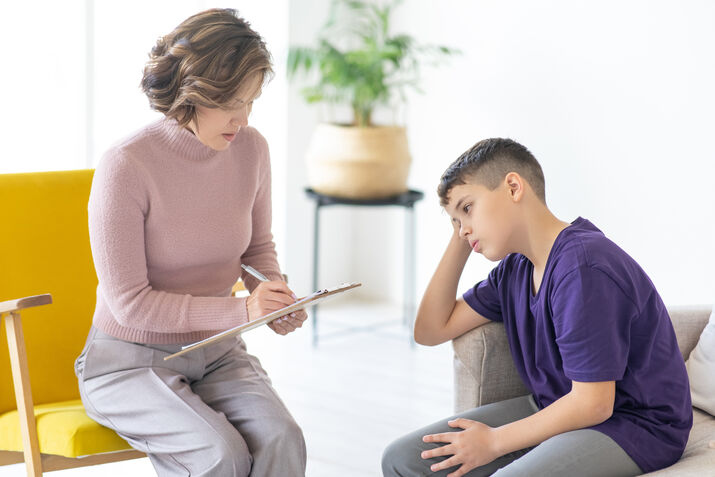
Effective interviews usually includes a detailed developmental and behavioral history, questions about school functioning, emotional health, family dynamics and mental health challenges, peer relationships, sleep, nutrition, physical activity, and extracurricular life. A chief focus is on whether symptoms are severe enough and whether they appear across settings. That matters because a child who struggles only in one environment may need a different kind of intervention treatment plan than a child whose difficulties are persistent across settings.
For parents, one of the biggest benefits of a thorough evaluation is clarity. Even when the answer is not ADHD, families often leave with a better understanding of what is going on. And if the answer is ADHD, that knowledge can help replace blame painful dynamics with a science-based intervention more targeted plan.Honest acknowledgment of what happened and why it hurt
Space for the injured person to feel the impact instead of rushing past it
Empathy for the human struggle behind the behavior, without excusing it
A willingness to forgive the person who caused the pain and to release resentment.
When possible, changed behavior and accountability inside the relationship can strengthen the repair.
Not every family member moves through these steps at the same pace. Some people forgive quickly but shallowly. Others take longer because the wound touched something deeper. Neither approach automatically means a person is doing it wrong. What matters is whether the process is moving toward truth, accountability, and emotional release rather than toward denial or endless retaliation.
In many families, one of the biggest challenges to forgiveness is rushing. Someone says “sorry,” and everyone is expected to move on immediately. That may restore surface peace, but it often does not create real healing. Lasting forgiveness in family life usually requires the steps listed above. It needs people to slow down long enough to understand what happened and why it mattered.
Accountability is different. Accountability says, “This needs to change, and I am responsible for it.” Shame says, “This is happening because I’m such an F-up; I need to kick my own A** to stop being such a loser!” Accountability opens a door to transformative change. Shame is more likely to result in self-medicating, not resolution.
This distinction matters deeply when thinking about how to become the person you want to be. The most durable growth usually comes from honesty joined with self-love. You can acknowledge where you are falling short without deciding that you are hopeless. You can take responsibility for your patterns without turning yourself into the enemy. Think about how you might speak with a friend who is struggling to be better.
People often grow more effectively when they stop trying to punish themselves into becoming better and start practicing a more effective form of self-care instead.
This is an important part of learning how to become the person you want to be. The environment you create or support matters. Your schedule matters. Your habits matter. Your relationships matter. You may sincerely want growth, but if your daily life consistently pulls you away from your intentions, the change will feel much harder to maintain.
Of course, this does not mean you need to accomplish significant growth before you can grow. It means it can be helpful to reduce friction and enhance support. That might involve protecting sleep, changing how you begin mornings, reducing one draining commitment, setting one overdue boundary, spending less time in comparison-heavy spaces, growing in self-compassion, or being more intentional about who gets regular access to your emotional life.
What Families Can Do to Support Growth
Families often want to help a grieving loved one but do not know how. Sometimes they become overly focused on cheering the person up. Other times they avoid the topic of the loss because they do not want to make things worse. Both responses are understandable and other kinds of support has value as well.
When families want to support post-traumatic growth after loss, it helps to focus less on fixing and more on making room. That means allowing the grieving person to talk about the loss without rushing them toward optimism. It means letting grief exist in ordinary life instead of treating it like an emergency that must be quieted immediately. It means being patient with changes in energy, mood, and emotional availability. It also means staying open to the possibility that the person is changing in ways that may ultimately bring more depth, not just more pain.
Families can also help by supporting meaningful routines. As grief often disrupts daily rituals, small acts of stability can matter. Ritualized sleep, meals, movement, time outside, and connection with trusted people can all help create a foundation for healing. No routine removes grief, but structure can make it easier for a person to stay connected to life while they grieve.
When Growth Feels Invisible
Sometimes people worry that because they still feel sad, they must not be healing. But grief and growth often coexist. A person may miss someone deeply years after the loss and still have experienced profound growth. They may still cry on anniversaries, still feel the ache of absence, and still recognize that they are stronger, clearer, or more compassionate than before.
This is especially important for people who fear they are “doing grief wrong.” Post-traumatic growth after loss is not measured by how quickly someone stops hurting. It is often measured by more subtle signs:
- a greater ability to tolerate painful feelings without shutting down,
- deeper appreciation for time and relationships,
- more honesty about needs and emotions,
- a stronger sense of purpose or values, and
- renewed capacity for hope, even if it feels different than before.
These changes may be easy to miss if someone is looking only for the absence of pain. But healing is not always about feeling less. Sometimes it is about becoming more capable of holding what is real without being destroyed by it.
You may want to reach out when school is becoming a pattern of negative feedback, when mornings and evenings feel unmanageable, when your child is starting to feel bad about himself, or when you find that ordinary parenting strategies are not enough to improve the situation. It is also worth paying attention if teachers have expressed repeated concern, especially across more than one school year.
Seeking help does not commit you to treatmenta diagnosis or to any one treatment path. It simply gives your family better information. In many cases, that information is what finally helps parents feel less stuck.
Families also get stuck when harmful patterns continue without change. It is much harder to move toward forgiveness when the same injury keeps happening again. In those situations, the work is not only about letting go. It is also about creating a safer relational pattern. Sometimes that means clearer boundaries. Sometimes it means family therapy. Sometimes it means helping one or more family members build skills around emotion regulation, communication, or accountability.
Another common obstacle is pride. In some families, apology feels humiliating or weak. People defend themselves rather than reflect. They explain instead of taking responsibility. They want forgiveness without truly facing the impact of what they did. That posture usually blocks repair. Healthy forgiveness grows much better in families where humility is practiced by adults as well as children.
This is why so much personal growth happens through relationships, not outside of them. If you want to know how to become the person you want to be, pay attention to how you are showing up with the people closest to you. Are you becoming more present or more distracted? More authentic or more avoidant? More reactive or more grounded? More controlling or more emotionally open? The people who live closest to you often experience the clearest version of who you are becoming.
That can feel sobering, but it can also promote hope. Relationships give repeated chances to practice the kind of person you want to be.
This is an important part of learning how to become the person you want to be. The environment you create or support matters. Your schedule matters. Your habits matter. Your relationships matter. You may sincerely want growth, but if your daily life consistently pulls you away from your intentions, the change will feel much harder to maintain.
Of course, this does not mean you need to accomplish significant growth before you can grow. It means it can be helpful to reduce friction and enhance support. That might involve protecting sleep, changing how you begin mornings, reducing one draining commitment, setting one overdue boundary, spending less time in comparison-heavy spaces, growing in self-compassion, or being more intentional about who gets regular access to your emotional life.
When Professional Support Can Help
Loss does not always unfold in a way that families or individuals can process easily on their own. Sometimes grief becomes tangled with trauma, guilt, numbness, panic, depression, or family conflict. Sometimes a person feels stuck between functioning on the surface and feeling emotionally frozen underneath. Sometimes the loss has disrupted so much that it is hard to know where to begin.
In those moments, therapy can be very helpful. A therapist can help create a space where grief is not rushed or minimized. They can help a person process painful memories, understand the emotional impact of the loss, work through guilt or unfinished feelings, and explore how life has changed. Therapy can also help families support each other more effectively when grief is affecting communication, parenting, routines, or relationships at home.
At Helping Families in Bethesda, MD, individuals, children, adolescents, couples, and families can find a safe and caring space to process loss with honesty and compassion. Whether the goal is to stabilize after a painful change, reduce conflict, rebuild connection, or explore the possibility of post-traumatic growth after loss, therapy can offer meaningful support along the way.
Just as important, many boys and teenagers benefit from adults who understand that repeated criticism does not build executive functioning. Children do better when expectations are clear, routines are predictable, instructions are simple, and adults respond consistently and manifest firm and loving kindness. They also do better when the people around them recognize strengths along with struggles. A boy who hears only that he is “too much” may begin to believe something is wrong with who he is, not simply that he needs support for how his brain manages attention and self-control.
That emotional piece matters. Children who are struggling with undiagnosed ADHD often absorb years of negative messages. When families get the right help, the goal is not only better behavior. It is also better understanding, less conflict, and healthier confidence.
It also helps when family members learn to talk about hurt in ways that invite understanding rather than immediate defensiveness. Instead of storing up months of resentment, they learn to say, “That really affected me,” “I felt hurt when that happened,” or “I want us to repair this instead of letting it sit between us.” Those conversations are not always easy, but they help prevent injuries from becoming silent, permanent structures inside the family.
Families do not need to be endlessly emotional to do this well. They simply need to become more capable of repair. Often, the healthiest homes are not the ones with the least conflict. They are the ones where conflict does not harden into lasting resentment.
Consistency usually matters more than grand gestures. A smaller change sustained over time often shapes a person more deeply than a dramatic change that collapses quickly. A person who apologizes more honestly, sets one better boundary, takes ten minutes to reflect each day, or consistently speaks more gently to themselves may be doing more real growth work than someone chasing constant reinvention.
If you are serious about how to become the person you want to be, it may help to lower the intensity and increase the steadiness. Ask yourself not only, “What would inspire me?” but also, “What can I practice consistently enough to become the person I intend to be?” That question often produces more meaningful change.
This is an important part of learning how to become the person you want to be. The environment you create or support matters. Your schedule matters. Your habits matter. Your relationships matter. You may sincerely want growth, but if your daily life consistently pulls you away from your intentions, the change will feel much harder to maintain.
Of course, this does not mean you need to accomplish significant growth before you can grow. It means it can be helpful to reduce friction and enhance support. That might involve protecting sleep, changing how you begin mornings, reducing one draining commitment, setting one overdue boundary, spending less time in comparison-heavy spaces, growing in self-compassion, or being more intentional about who gets regular access to your emotional life.
Post-traumatic growth after loss is not about finding a silver lining for pain that should never have happened. It is about recognizing that human beings can be changed by grief in ways that are not only diminishing. Through honest mourning, supportive relationships, meaning making, not resisting or denying grief and time, some people discover new strength, deeper connection, and clearer purpose on the other side of profound loss.
That kind of growth cannot be rushed, and it should never be demanded. It comes slowly, often quietly, and often alongside continuing sorrow. But it is real. A person may carry grief and still grow. They may hurt and still heal. They may miss what was lost forever and still build a life that feels meaningful, connected, and alive.
If loss has changed you or your family in ways that feel difficult to carry, support can help. Healing does not mean forgetting. It means learning how to live honestly with what has happened while still making room for hope, resilience, and a future that holds meaning again.
Those are the questions that bring real clarity to Typical bboy behavior vs ADHD. Not every active boy has ADHD. Not every impulsive child needs an evaluationhas a diagnosable problem. But when the challenges are atypical, persistent and impairing, it is wise to pay attention rather than dismiss them asconclusing, “he is just being a boy.” Early understanding can reduce frustration, protect self-esteem, and help families get the right kind of support sooner rather than later.
If your child’s behavior has moved from occasional frustration to an ongoing source of concern, a thoughtful consultation may be the next best step. The goal is not to label your child. The goal is to understand him well enough to help him succeed.
Forgiveness does not mean forgetting, excusing, or accepting unhealthy behavior. It means choosing healing over bitterness, repair over emotional distance, and growth over permanent resentment. It helps children feel safe enough to learn from mistakes. It helps couples remain connected through difficult seasons. It helps families stay emotionally alive instead of emotionally guarded.
If your family feels stuck in resentment, repeated conflict, or old hurts that never seem to heal, support can help. At Helping Families, individuals, children, adolescents, couples, and families can find a safe and caring space to explore wounds, rebuild connection, and move toward healthier ways of living together. In the long run, forgiveness is not just about letting go of the past. It is about protecting the future of connections within the family.
Becoming the person you want to be is not about arriving at a destination. It’s about the journey and being in the right efforts with oneself. It is about alignment. It is about living in a way that feels more honest, more grounded, and more connected to what matters most. That kind of growth takes time, but it is powerful and helps people to feel reborn. It often begins when you stop waiting and begin practicing who you want to become today.